Fighting Inequalities in Access to Employment: IBB Regional Employment Offices
Mina Duru Çalışkan
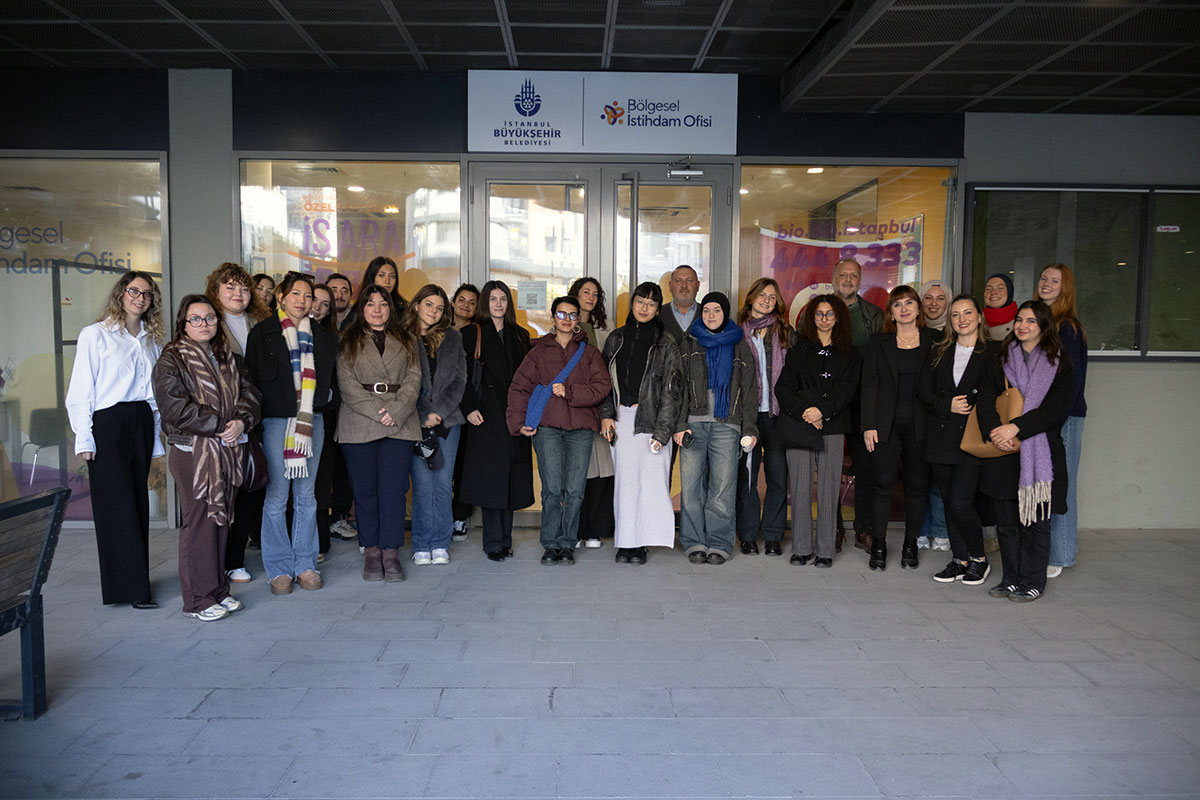
Within the scope of the Jean Monnet Module SOCRETUR and the course SOC411 Social Rights and Social Inclusion in Türkiye and Europe, we visited the Istanbul Metropolitan Municipality (IBB) Bayrampaşa Regional Employment Office on 18 December 2025.
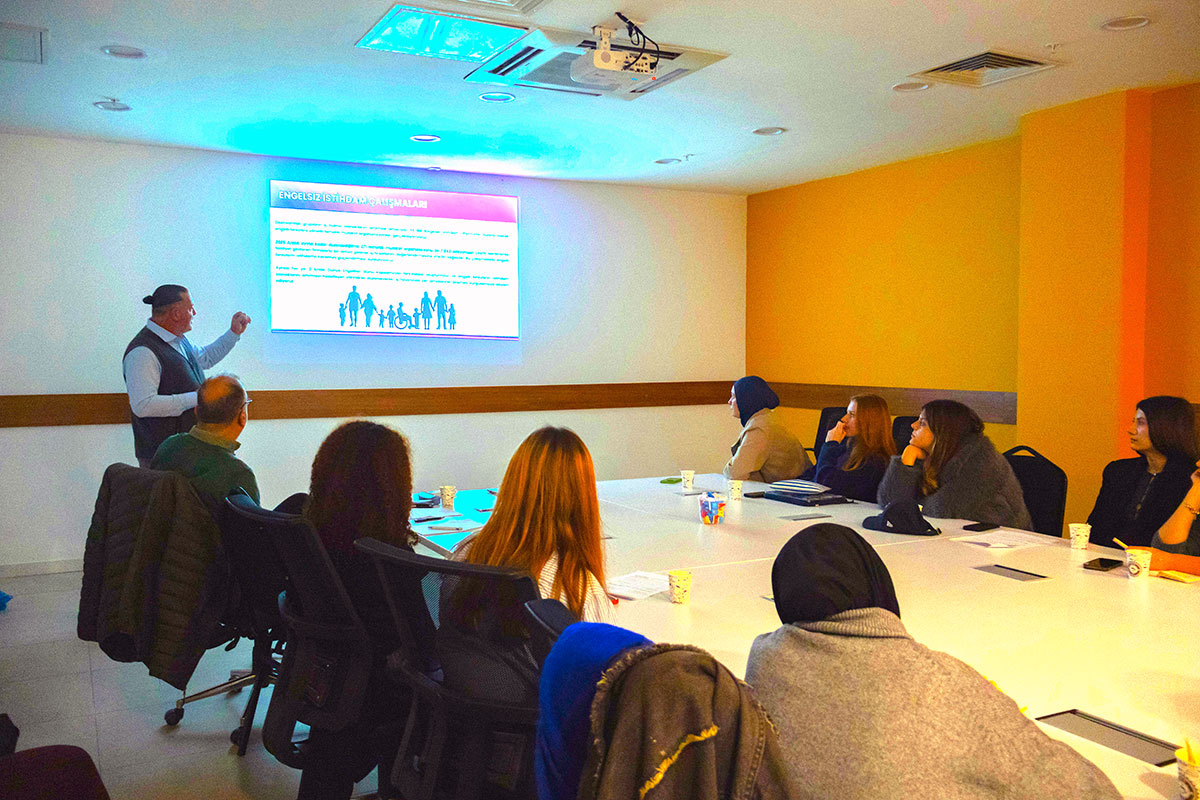
During the visit, Hüseyin Ferdi Olur, Group Operations Supervisor of the IBB Regional Employment Offices, gave a presentation on the history, functioning, and employment data collected through the project to date. Following the presentation, a discussion with students enabled a deeper understanding of unemployment and employment processes.
What Are Regional Employment Offices?
The Regional Employment Offices were established in 2020 as a social project operating under İstanbul Personel Yönetim A.Ş. (İSPER) with the status of a Private Employment Agency. Their main objective is to contribute to tackling unemployment in Istanbul by matching job seekers with employers.
Initially launched with a single office and a target of reaching 200,000 unemployed individuals, the project has so far mediated employment for approximately 275,000 people, expanded to 34 offices, and supported 22,500 companies in recruiting employees.
Job seekers and employers are brought together primarily through the dedicated career portal (https://bio.ibb.istanbul). Beyond simple job postings, the offices conduct pre-screening processes and actively match candidates with suitable job offers.
An Opportunity for University Students
Hüseyin Ferdi Olur emphasized that the platform also targets university students, offering short-term and part-time job opportunities. In addition, the offices provide training-supported employment programmes, particularly aimed at young unemployed individuals.
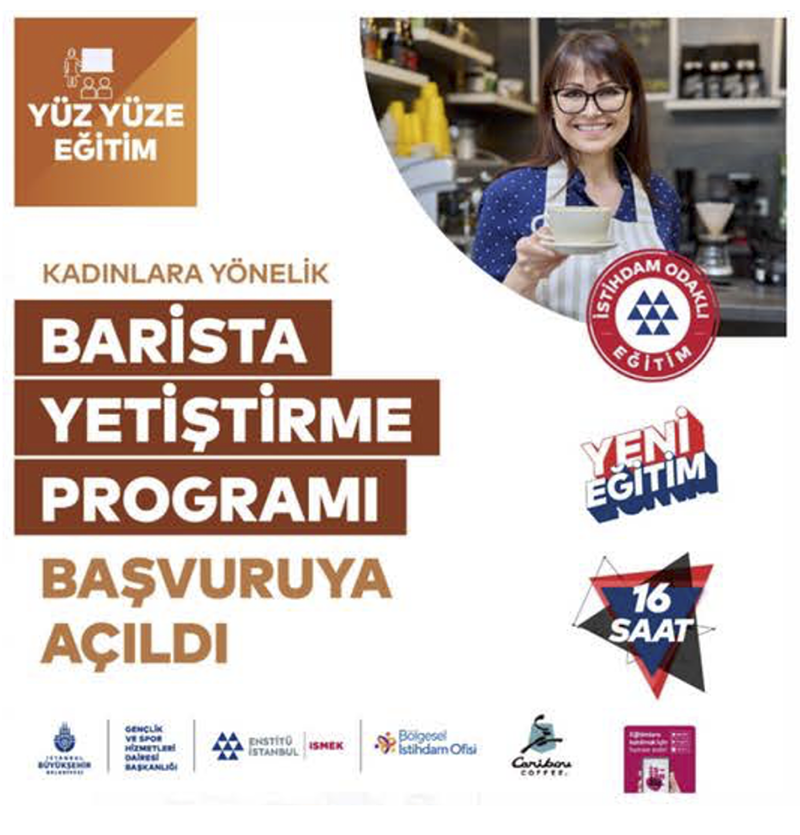
These programmes focus on equipping participants with skills required in blue-collar occupations. Examples include training in sales consultancy, barista skills, elevator inspection engineering, and pastry making. Certification processes are carried out in cooperation with İŞKUR. Furthermore, the offices maintain contact with individuals for up to one year after employment, monitoring social security continuity and offering follow-up support.
Women Facing “Double Barriers” and Employers Seeking “Barrier-Free Disabled” Workers
According to data presented by Olur, most job seekers applying to the Regional Employment Offices are under 30 years old and have secondary or vocational education. This profile remains largely unchanged among disabled job seekers. However, a significant gender imbalance emerges: 73.11% of disabled job seekers are men, while only 26.89% are women.
Olur explained that this disparity is partly due to family constraints, as spouses or parents may prevent disabled women from participating fully in the labour market.
On the employer side, inclusivity remains limited. Although medium and large-scale enterprises in Türkiye are subject to disabled employment quotas, many workplaces lack both the physical infrastructure and the organizational mindset required for genuine inclusion. As a result, employers often seek what Olur described as “barrier-free disabled” workers, and in some cases, disabled employees are hired only nominally, existing “on paper” rather than in practice.
These observations indicate that legal regulations alone are insufficient to ensure the labour market inclusion of women and disabled individuals. A broader change in mindset is required.
Migrant Labour and Barriers to Formal Employment
Following the presentation, students raised questions regarding migrant employment. Olur noted that migrant labour in Türkiye is predominantly employed as informal, low-cost labour. Only a small proportion of migrants with valid work permits apply to the Regional Employment Offices.
Among those who do, individuals with Arabic language skills are often preferred by companies engaged in trade with the Middle East and North Africa.
What Happens After Employment?
In response to students’ questions about the long-term outcomes of placements, Olur explained that the offices maintain contact with individuals for at least one year after employment, particularly focusing on those from disadvantaged backgrounds. This follow-up process aims to identify employment-related challenges and develop appropriate solutions.